

Your Weekly Large Format Print Briefing - Week 8, 2026
Your weekly 5-minute intelligence briefing for large format print professionals

Week 8 closed out with a familiar signal: the real gains kept coming from workflow expansion and consolidation, not miracle hardware. UV shops got a clearer path to monetize rigid-print graphics on awkward objects, textile production showed what “industrializing customization” looked like in practice, and vendors leaned hard into automation messaging because labor didn’t magically get cheaper.
📢 This Week in Wide Format Brief
Roland DGA launched a UV DTF transfer media system designed for VersaOBJECT and VersaSTUDIO UV flatbeds.
Mimaki reported Erreà replaced 28 textile printers with seven Mimaki systems to tighten control and consistency.
Agfa previewed its FESPA Barcelona lineup with automation-heavy flatbed/hybrid positioning and workflow updates.
Drytac promoted Kieran Blacknall to UK Managing Director as part of its leadership bench build.
UK provider The Big Ink Tank installed an Agfa Anapurna Ciervo H3200, replacing an older H3200i hybrid.
📰 Top 5 Headlines This Week
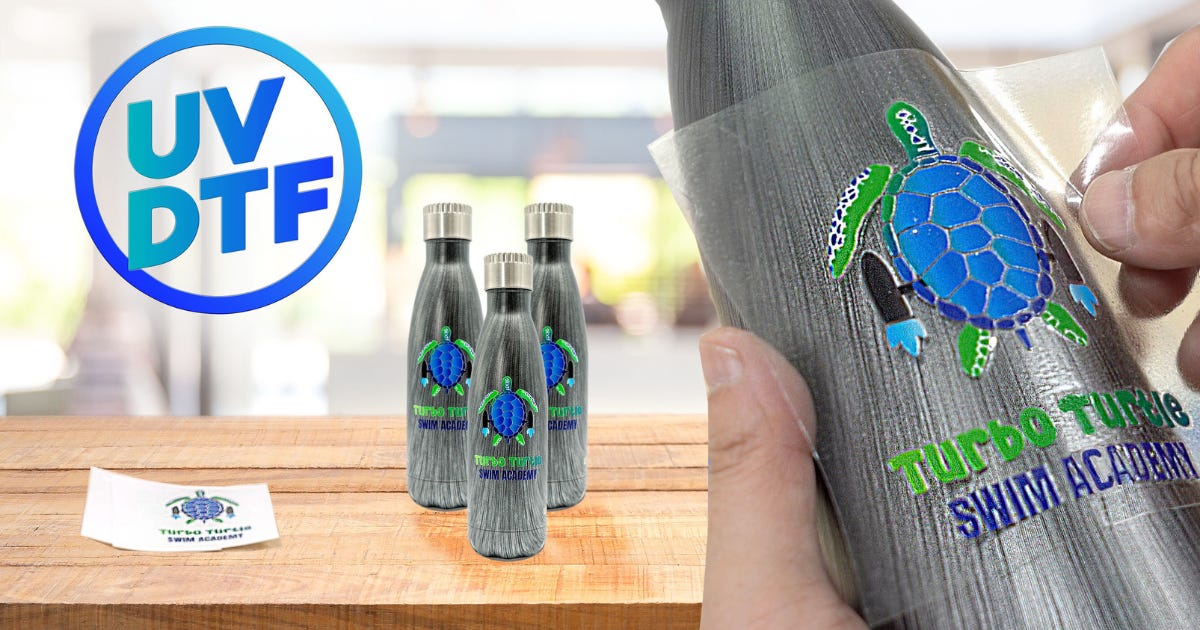
Roland DGA launched UV-DTFA/UV-DTFB media to turn UV flatbeds into a UV DTF transfer workflow
Summary:
Roland DGA announced a UV Direct-to-Film transfer system built around two media components—UV-DTFA Print Sheets and UV-DTFB Transfer Film—designed to work with VersaOBJECT MO Series, VersaOBJECT CO-i Series, and VersaSTUDIO BD Series UV flatbed printers.
Industry takeaways:
The real “product” here was the media engineering (dimensional stability and reduced residue) meant to stabilize a transfer workflow on UV flatbeds.
Roland tied the workflow to existing inksets (V-BOND for VersaOBJECT; ECO-UV 5 for BD-8/BD-12), keeping this as an attach sale for installed base owners.
The consumables were clearly positioned for operational purchasing: A3 sheets (25/box) and 12.2” × 82” rolls.
Why It Matters:
UV DTF only mattered when it stopped being a messy science project. Roland’s angle was to make the transfer step more repeatable (less residue, more stability) and keep it compatible with platforms shops already owned. The “up to two times better adhesion” line was still a vendor claim, so the smart move for operators was to treat this like any new substrate: test it on your top 10 real materials before you sell it as “durable.”
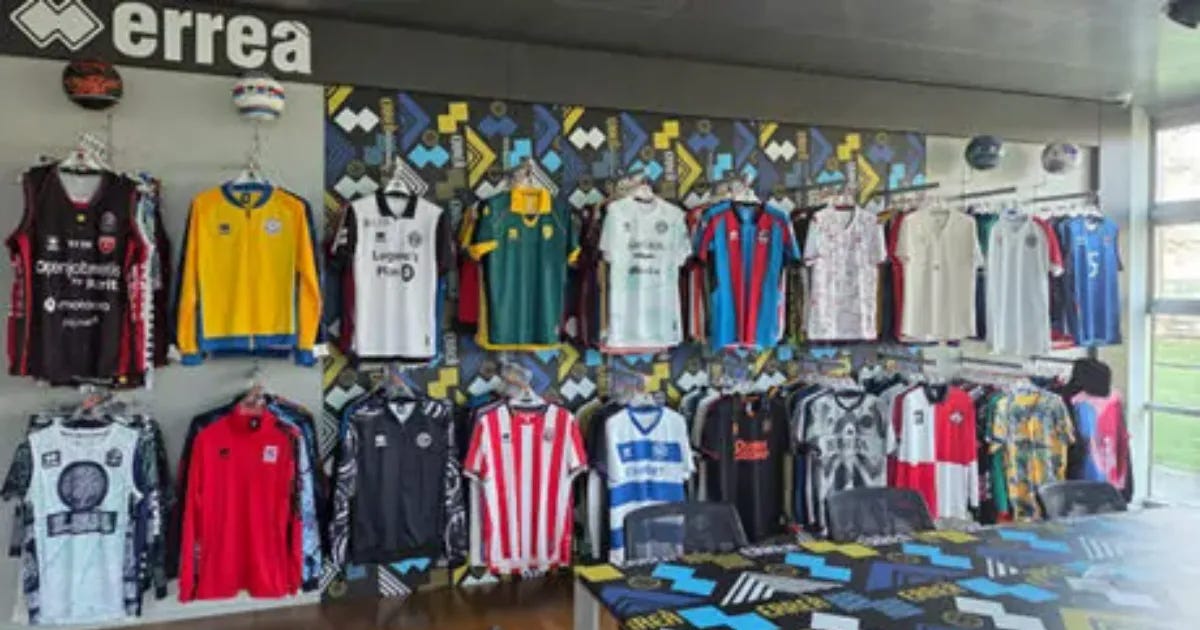
Erreà cut a 28-printer textile fleet down to seven Mimaki units (Tiger600-1800TS + TS330-1600)
Summary:
Mimaki said Italian sportswear manufacturer Erreà upgraded its textile printing operations by installing seven Mimaki systems—three Tiger600-1800TS dye-sublimation printers and four TS330-1600 units—replacing a prior fleet of 28 printers.
Industry takeaways:
This was a standardization story: fewer platforms, tighter color control, simpler maintenance, and higher utilization instead of managing a zoo of devices.
The split between Tiger (industrial volume) and TS330 (agility) showed how sportswear print was being engineered for mass customization without chaos.
Multi-site planning mattered: Erreà used one TS330 for sampling at HQ and ran production systems at its Romania facility—color repeatability across locations was the actual challenge being solved.
Why It Matters:
Most textile shops didn’t lose margin on ink—they lost it on variability. A 28-to-7 consolidation told you what Erreà valued: predictable output, easier training, and fewer failure points. If you were bidding custom sportswear, that translated directly into fewer remakes and tighter lead times—without needing a “new market,” just better execution.

Agfa framed its FESPA Barcelona pitch around automation and a tiered platform lineup (Onset/Tauro/Bronco + Asanti v8)
Summary:
Ahead of FESPA Barcelona (19–22 May 2026), Agfa’s coverage positioned a renewed wide-format portfolio at Hall 3, Booth D100, emphasizing automation and throughput and calling out platforms including Onset Panthera, Jeti Tauro H3300 UHS, and the Jeti Bronco H3300 HS, alongside Asanti workflow v8.
Industry takeaways:
The messaging centered on automation as the differentiator—autoloading/robot handling and “keep it running” throughput talk.
The Bronco H3300 HS positioning (“between Ciervo and Tauro”) mattered because it targeted shops stuck between entry hybrid and true production-class systems.
Workflow got a real mention: Asanti v8 was presented with cutter support, job sorting/layout, and broader automation—features that impacted output more than another spec sheet number.
Why It Matters:
When vendors talk automation, they were usually admitting the same thing operators already knew: labor was the constraint. Agfa’s lineup narrative was a bet that productivity came from reduced touchpoints—material handling, job orchestration, and repeatable throughput—not from another incremental head/ink headline. If you were shopping in this tier, your due diligence wasn’t “max speed,” it was: uptime behavior, operator burden, and whether your finishing/logistics could keep up with what the printer could now push.
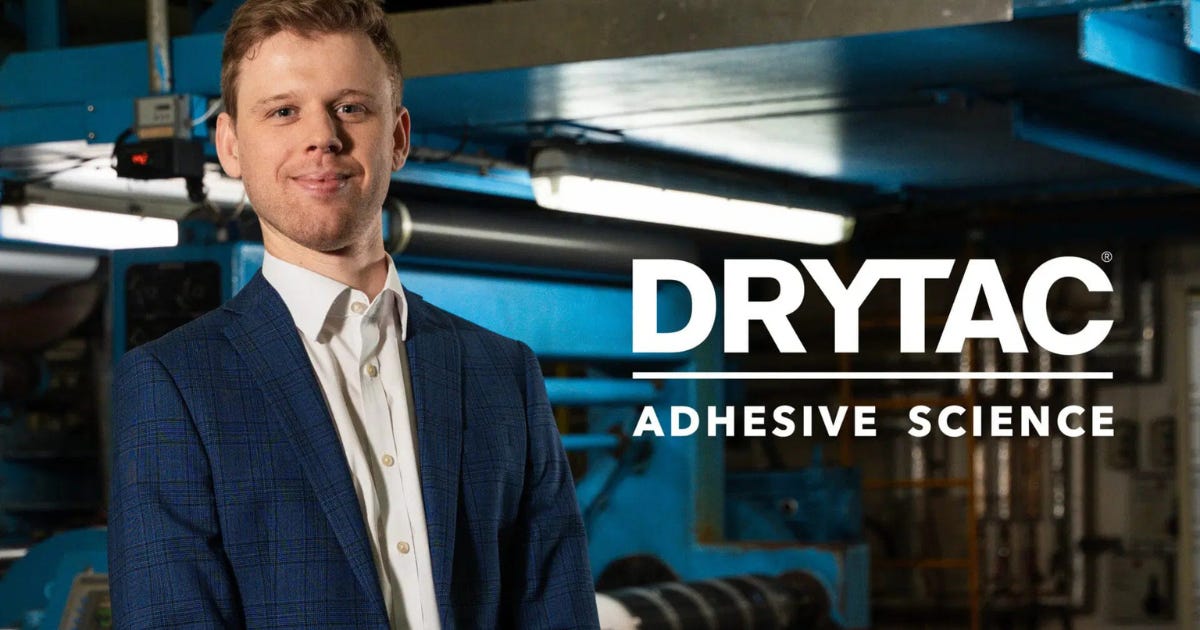
Drytac promoted Kieran Blacknall to UK Managing Director
Summary:
Drytac announced it promoted Kieran Blacknall to Managing Director in the UK, noting he most recently served as Operations Manager.
Industry takeaways:
For media/adhesives suppliers, leadership moves usually translated into service reliability and channel execution, not flashy product pivots.
Operations leadership in the top seat often signaled a push toward process discipline (availability, consistency, responsiveness).
This mattered most to signage and PSPs when it improved the boring stuff: lead times, product support, and fewer “surprise” substitutions.
Why It Matters:
Shops didn’t win jobs because a film existed—they won because it arrived on time, performed as expected, and didn’t create rework. A supplier that put ops DNA into leadership was usually trying to tighten execution. The practical question for UK buyers was simple: did service levels and availability improve over the next quarter, or was it just a title change?
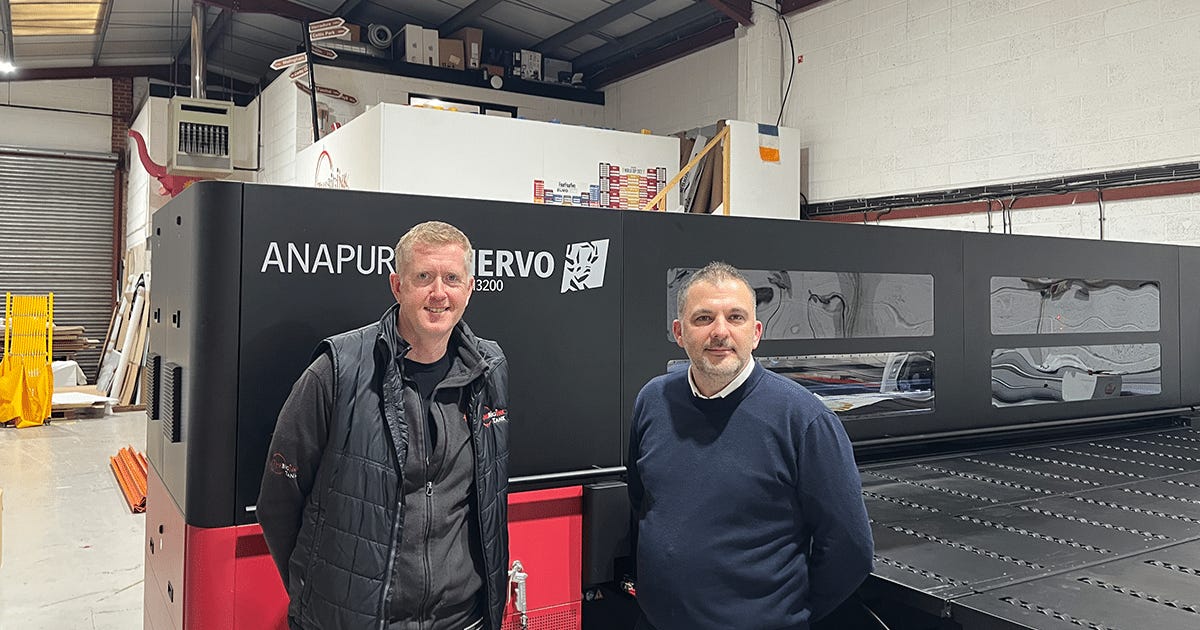
The Big Ink Tank installed an Agfa Anapurna Ciervo H3200, replacing an older H3200i
Summary:
Trade coverage reported Coventry-based large format provider The Big Ink Tank installed an Agfa Anapurna Ciervo H3200 hybrid UV LED printer, replacing an Anapurna H3200i that had been in service since 2018, driven by increasing volumes and tighter deadlines.
Industry takeaways:
This was a capacity + reliability upgrade, not a “new capability” story—classic sign of demand pressure meeting equipment lifecycle.
Hybrid platforms stayed relevant when shops juggled mixed work (rigids + roll) and needed scheduling flexibility without splitting across devices.
“Bespoke, high-value work” scaled only when the print engine stopped being the bottleneck and the team could keep quality stable under deadline load.
Why It Matters:
Customer installs were easy to ignore—until you remembered they were the clearest signal of what shops actually bought when deadlines got tighter. Replacing a 2018-era hybrid with a newer Ciervo model was a reminder that production didn’t pause for marketing cycles. If your hybrid was aging, Week 8’s lesson was boring and profitable: model the real cost of downtime and rework before you argue with CapEx.
🎯 This Week’s Strategic Takeaway
Week 8 reinforced a pattern wide format kept rewarding: reduce variability and expand what existing equipment could sell—whether that meant a cleaner UV transfer workflow, or cutting a textile fleet down to a manageable, repeatable system set.
❌ This Week’s Noise
“Productivity improvements” without workflow proof stayed noise. Claims like “up to 2× better adhesion” were fine marketing, but they didn’t replace substrate testing, wash/durability validation, and a real QC checklist.
📅 What’s Coming Up
📅 ISA International Sign Expo 2026 — 8–10 April 2026 | Orlando, FL
North America’s largest sign, graphics, and visual communications trade show, featuring wide-format printing equipment, substrates, software solutions, and installation technologies with education sessions focused on business operations and emerging applications.
🔗https://www.signexpo.org
📅 FESPA Global Print Expo 2026 — 19–22 May 2026 | Barcelona, Spain
Europe’s premier specialty print exhibition covering wide format, textile printing, screen printing, and digital decoration technologies.
🔗 https://www.fespa.com
🧠 Smarter Every Week
Before you swap inks, media, or coatings—OEM or aftermarket—lock in a control sample. Run a repeatable test file on your current setup. Record color values, cure settings, speed, and environmental conditions. Capture high-resolution photos under the same lighting and keep the physical print labeled and dated.
That reference becomes your benchmark. Without it, you’re not evaluating performance—you’re relying on memory. And memory is a terrible measurement tool.
Thanks for tuning into this week’s Wide Format Brief. If you found this useful, share it with a colleague who’d benefit. Until next time—keep printing.