

Your Weekly Large Format Print Briefing [Week 50, 2025]
Your weekly 5-minute intelligence briefing for large format print professionals

Week 50 reinforced a familiar pattern: wide format kept rewarding shops that engineered reliability into their workflows. Ink delivery and maintenance automation took center stage, direct-to-substrate production proved it could scale, finishing moved further in-house, and talent development stayed firmly tied to operational resilience rather than soft branding.
📢 This Week in Wide Format Brief
ColDesi introduced an automated ink management system aimed at improving uptime
Mimaki highlighted high-volume direct printing on wood using an industrial UV flatbed
Girls Who Print announced its 2025 award winners and future development framework
Supreme Graphics brought raised UV embellishment finishing fully in-house
Ricoh demonstrated wrap-grade output using Drytac films on production equipment
📰 Top 5 Headlines This Week
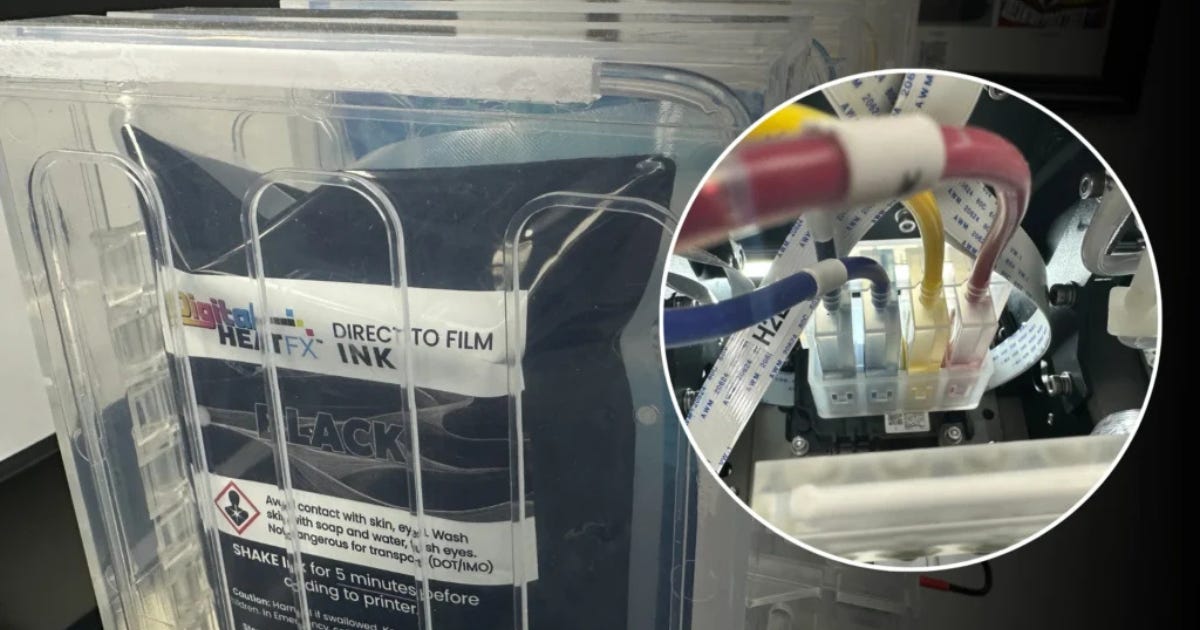
ColDesi introduced CAIMS to automate ink delivery and protect uptime
Summary:
ColDesi Global announced the ColDesi Advanced Ink Management System (CAIMS), a closed-loop ink delivery and monitoring solution designed to reduce waste and improve uptime. The system focused heavily on white ink stability through continuous circulation and automated maintenance, aiming to reduce clogging, downtime, and operator intervention during idle periods and shutdowns.
Industry takeaways:
Closed, monitored ink delivery reduced contamination risk and cartridge waste
Automated white ink circulation targeted downtime during idle periods
Ink reliability shifted from operator habit to system-level design
Why It Matters:
Ink systems rarely generated excitement, but they dictated whether production ran smoothly or stalled unexpectedly. By engineering maintenance and monitoring directly into the ink delivery process, CAIMS pointed toward a future where uptime depended less on individual expertise and more on repeatable, scalable system design.
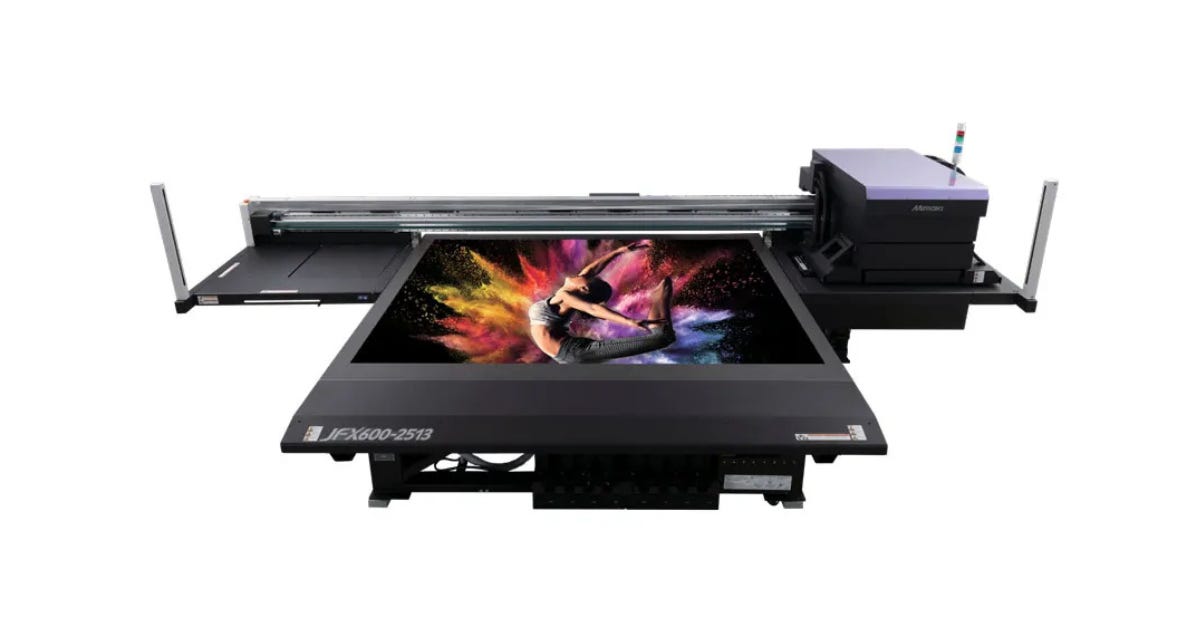
Mimaki enabled high-volume direct printing on wood using an industrial UV flatbed
Summary:
Mimaki Europe shared how CEMAB shifted wooden display production to direct UV printing, removing vinyl overlays, laminates, and adhesive steps. Using an industrial flatbed system, the company reportedly achieved high daily output while simplifying the workflow. The case positioned direct-to-wood printing as a scalable production method rather than a decorative niche.
Industry takeaways:
Direct-to-substrate printing removed multiple risk-prone process steps
Throughput demonstrated the model scaled beyond boutique décor work
Sustainability gains came from fewer consumables, not marketing language
Why It Matters:
Direct printing only made sense when it reduced steps without adding instability. This example showed that when substrate behavior was understood and standardized, direct-to-wood workflows could protect margins, shorten lead times, and reduce rework—key advantages in retail display production.

Girls Who Print announced its 2025 award winners
Summary:
Girls Who Print announced the recipients of its 2025 awards, recognizing leadership, emerging talent, and advocacy across the print industry. The announcement followed its annual global conference and also highlighted the upcoming Advancement Resource Center (ARC), a structured initiative focused on education, mentorship, and long-term career development within the industry.
Industry takeaways:
Awards emphasized operational leadership and skill development
ARC introduced a more structured approach to workforce growth
Talent retention remained a core business concern, not a social add-on
Why It Matters:
Production capability depended on people as much as equipment. Recognition programs and structured development paths supported retention, skill progression, and long-term operational stability—critical factors as shops competed for experienced operators and technical staff.
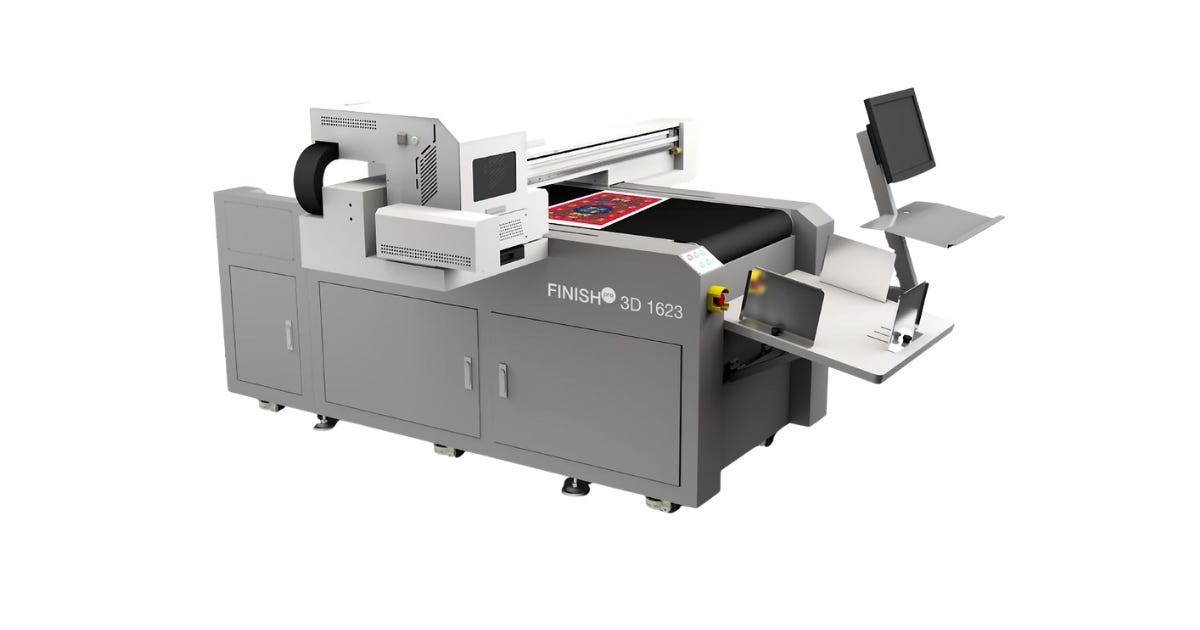
Supreme Graphics brought raised UV embellishment finishing in-house
Summary:
Supreme Graphics became the first North American provider to install Skandacor’s raised UV embellishment system, bringing premium finishing capabilities in-house. The move allowed dimensional UV effects to be produced without outsourcing, positioning embellishment as a practical value-add rather than a specialty service limited to large or niche providers.
Industry takeaways:
In-house embellishment restored margin control and scheduling flexibility
Lower entry cost reduced long-term dependence on outsourcing
Value-added finishing increasingly acted as a competitive differentiator
Why It Matters:
When finishing stayed outside the building, margins and timelines stayed outside control. Bringing embellishment in-house shortened turnaround times, protected pricing power, and allowed providers to sell premium effects with confidence rather than compromise.
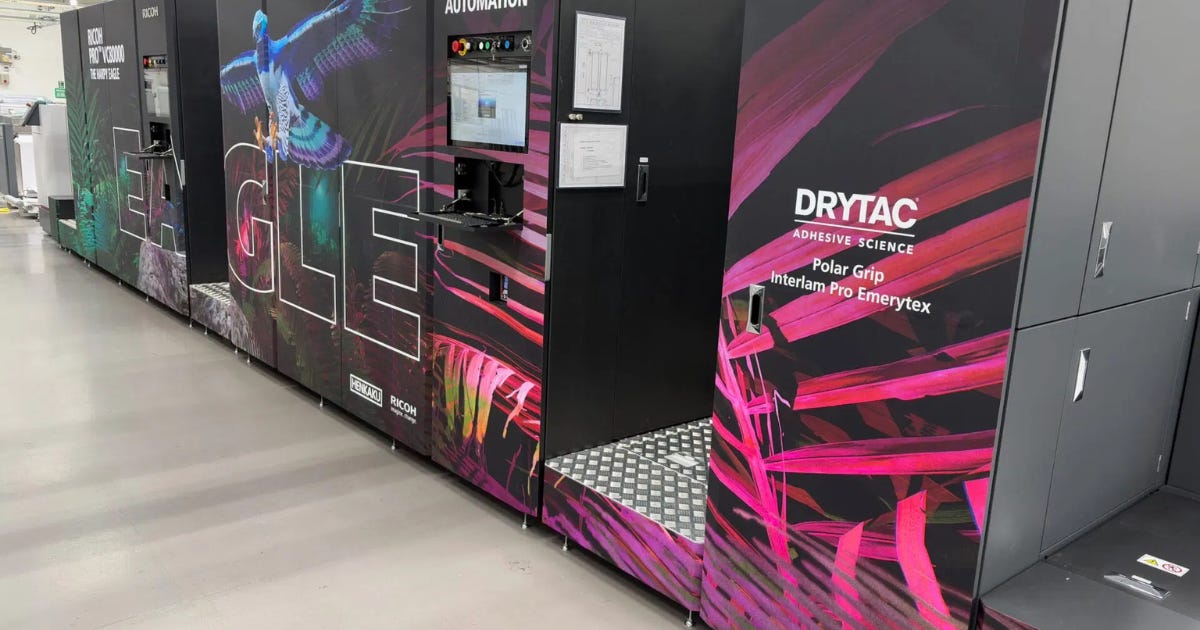
Ricoh demonstrated wrap-grade output using Drytac films on production equipment
Summary:
Ricoh Europe wrapped production printers at its Customer Experience Centre using Drytac films and protective laminates, turning the machines into live application showcases. The project demonstrated wrap performance on textured surfaces and highlighted the importance of pairing compatible films and laminates to achieve durable, repeatable results in real-world conditions.
Industry takeaways:
Textured surfaces demanded disciplined media selection
Film and laminate combinations were validated through real installation
Showrooms increasingly functioned as application proof, not decoration
Why It Matters:
Many wrap failures began with optimistic material assumptions. This example reinforced the value of standardized, proven media recipes that shops could confidently sell, install, and stand behind—especially on non-ideal surfaces.
🎯 This Week’s Strategic Takeaway
Reliability emerged as the most underpriced competitive advantage. Across ink delivery, substrate handling, finishing, and workforce development, the strongest operators reduced variability, removed unnecessary steps, and brought margin-critical processes under direct control rather than relying on workarounds or external partners.
❌ This Week’s Noise
Pantone’s Color of the Year discussions generated attention but delivered little operational value. While aesthetic trends mattered when clients requested them, they did not solve adhesion, curing, profiling, or finishing challenges—making them inspiration at best, not workflow strategy.
📅 What’s Coming Up
Outdoor Textile Frames / SEG Webinar – January 2026
A joint webinar hosted by EFKA, Durst, and TTS focused on outdoor textile frames, SEG systems, and sustainable advertising applications.
🔗 https://www.texo-trade.com/en_US/blog/item/efka-durst-and-tts-jointly-host-a-live-webinar-on-outdoor-advertising-399/C!Print Lyon – February 3–5, 2026 | Eurexpo, Lyon
A major European event centered on signage, wide format, and finishing workflows, with strong emphasis on automation and production efficiency.
🔗 https://www.salon-cprint.com/en/FESPA Global Print Expo 2026 + Corrugated / Textile – May 19–22, 2026 | Barcelona
The global checkpoint for wide format and textile print, with early sustainability-certified materials, hybrid systems, and RIP automation expected to dominate.
🔗 https://www.fespa.com/
🧠 Smarter Every Week
Standardize one “confidence test file” per workflow—covering adhesion, colour, registration, and finishing—and run it on every new media, laminate, or profile before selling it. Ten minutes of testing prevents hours of downstream troubleshooting.
Conclusion
Thanks for tuning into this week’s Wide Format Brief! Remember to stay tuned for more industry news and insights to keep your business at the forefront of the printing world. Until next time, keep printing!