

Your Weekly Large Format Print Briefing — Week 4, 2026
Your weekly 5-minute intelligence briefing for large format print professionals

Week 4 closed with a clear signal: the most valuable announcements focused on infrastructure—service networks, color standards, and business development programs—not just hardware specifications. Epson addressed DTF's support gap with branded service infrastructure, PRINTING United Alliance advanced color management beyond traditional reference conditions, and third-party testing validated production claims that vendor marketing couldn't.
📢 This Week in Wide Format Brief
Epson expanded DTF lineup with 64-inch SureColor G9070 emphasizing service infrastructure
Roland DG TY-300 earned BLI 2026 Pick Award for color accuracy and washability performance
swissQprint completed Generation 5 flatbed range with mid-market Oryx 5 and Topi 5 models
PRINTING United Alliance introduced G7+ System Certification for multi-technology workflows
Research and Markets projected digital textile printing market reaching $13.96B by 2032
📰 Top 5 Headlines This Week
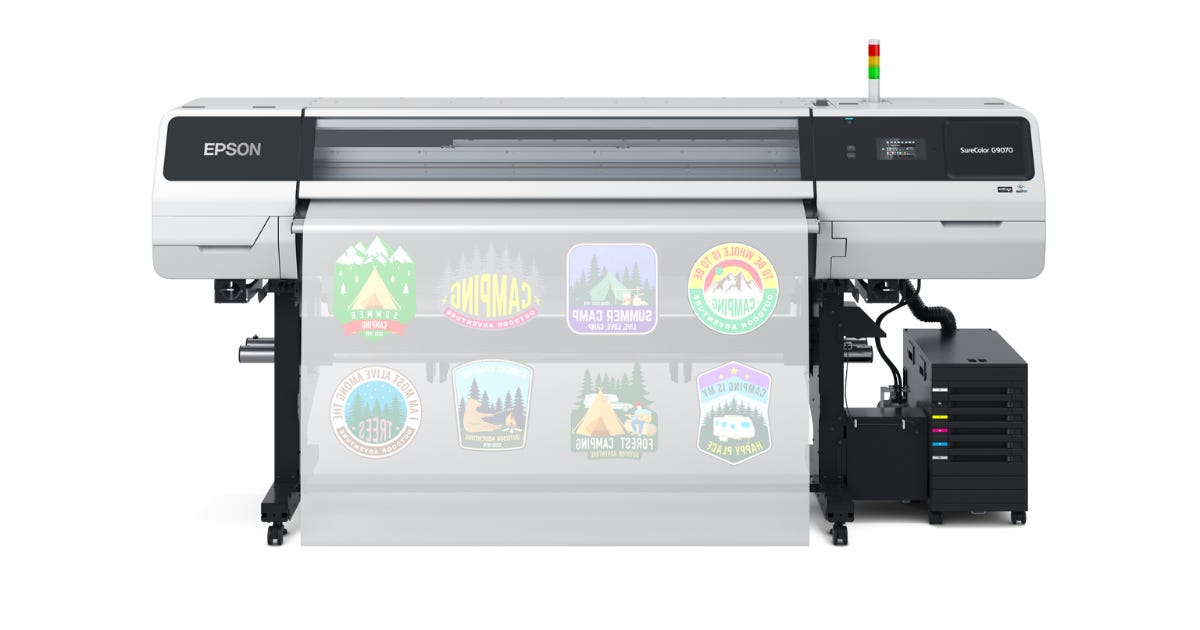
Epson Brings Service Infrastructure to DTF Market with SureColor G9070
Summary:
Epson announced the SureColor G9070 64-inch DTF printer at Impressions Expo on January 22, emphasizing branded service infrastructure over specs. The system featured twin-roll capability, automated maintenance, and 350 ft²/hr speeds with summer 2026 availability.
Industry takeaways:
Service infrastructure became explicit competitive differentiation in DTF market segment previously dominated by value-priced import equipment without regional support networks
Twin-roll simultaneous printing targeted gang sheet production workflows where setup time and media changeovers historically limited throughput on single-roll systems
Automated maintenance routines and sealed ink systems addressed operational consistency challenges that required specialized technical knowledge in first-generation DTF installations
Why It Matters:
Service infrastructure determined DTF production viability more than speed specs. Twin-roll capability reduced gang sheet changeover costs, while automated maintenance addressed consistency challenges generating costly reprints. Support networks mattered when production stopped.
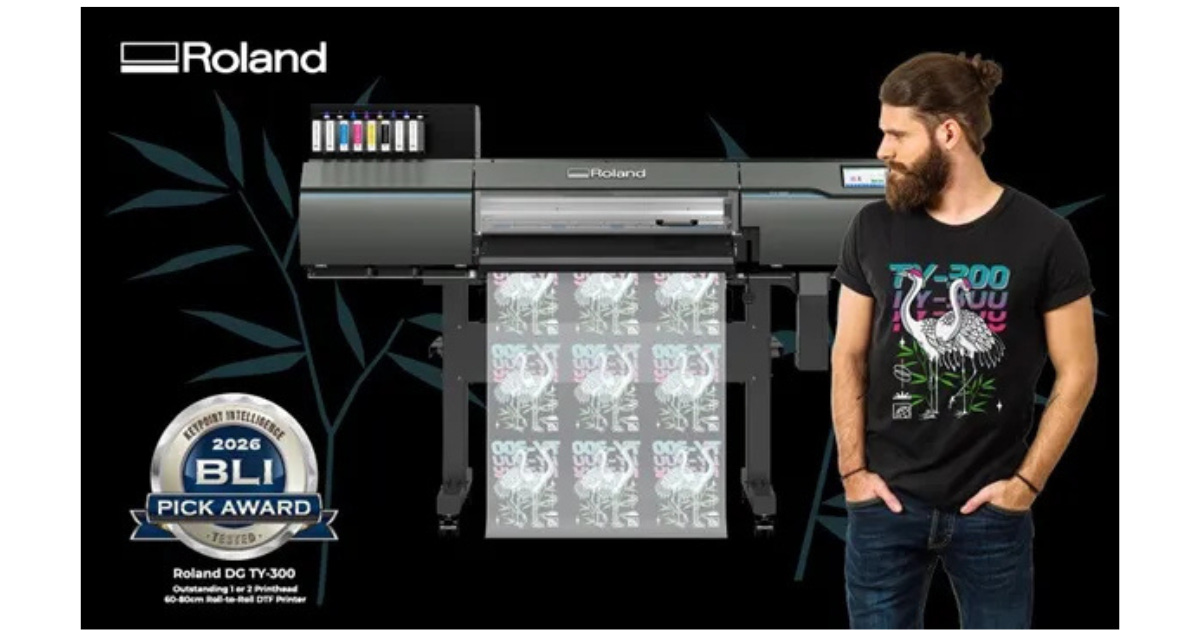
Roland DG TY-300 Wins Third-Party Validation Through Rigorous Testing
Summary:
Roland DG announced January 22 that the TY-300 DTF printer earned a BLI 2026 Pick Award from Keypoint Intelligence after comprehensive testing across image quality, color performance, durability, and productivity. The system achieved the largest color gamut recorded for CMYK-only DTF devices on white garments with lowest average DeltaE variance across spot colors.
Industry takeaways:
Independent third-party testing provided verifiable performance data beyond vendor claims, with 20-cycle wash testing documenting no visible breakup of fine details or halftone fills
Color accuracy measurement through standardized DeltaE variance testing established objective comparison baseline for brand color reproduction across difficult substrates including black garments
Productivity verification documented 117.33 ft²/hr in recommended production mode versus faster 4-pass mode exceeding 188.11 ft²/hr, quantifying speed-versus-quality trade-offs
Why It Matters:
Third-party validation mattered because vendor marketing claims lacked independent verification. Washability testing across 20 cycles provided durability data that purchase decisions required but trial periods couldn’t reveal. Standardized color accuracy measurement enabled objective comparison when every DTF vendor claimed “superior color performance.”
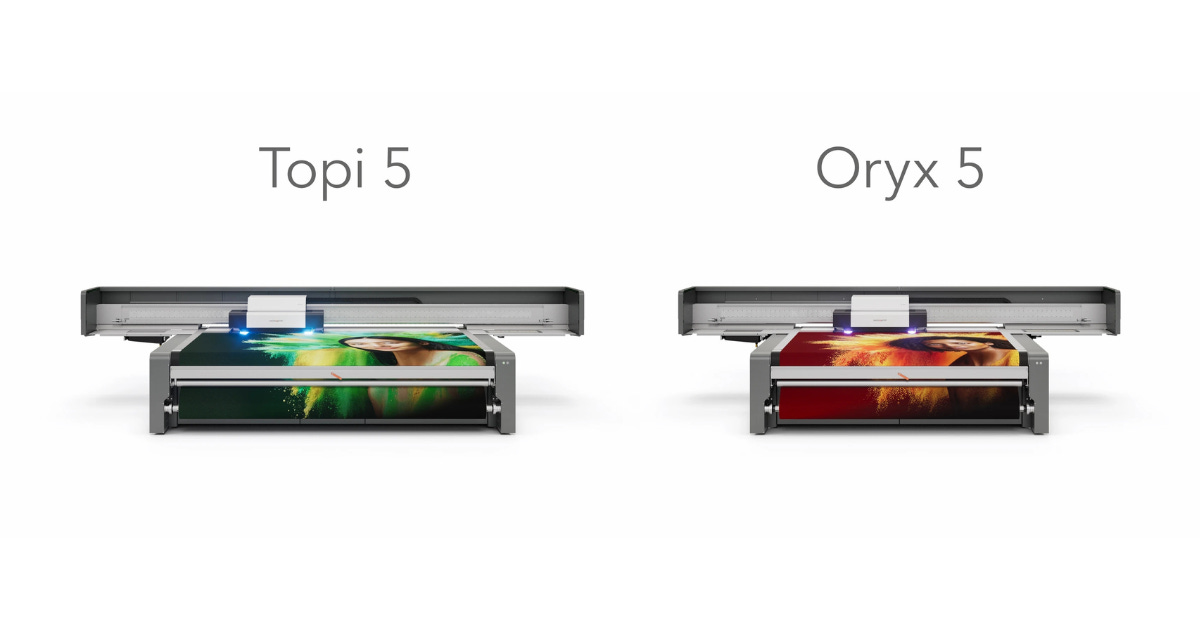
swissQprint Completes Generation 5 Flatbed Range with Mid-Market Models
Summary:
swissQprint introduced Oryx 5 (114 m²/hr) and Topi 5 (126 m²/hr) flatbed printers completing Generation 5 lineup. Both offered ten configurable color channels, 1350 dpi resolution, and 36-month warranties while targeting mid-volume production segments.
Industry takeaways:
Ten-color configurability reached mid-market price points, bringing specialty color and varnish flexibility to production volumes previously served by four-color CMYK-only systems
26% productivity improvement over Oryx 4 predecessor indicated iterative engineering refinement rather than architectural redesign in established flatbed platform
Modular design with field-convertible color channels allowed initial CMYK installations to add specialty capabilities as application mix evolved without equipment replacement
Why It Matters:
Ten-color flexibility reached mid-market volumes, eliminating the binary choice between limited-color affordability and specialty capability. Field-convertible channels allowed capability expansion without equipment replacement as application mix evolved.
PRINTING United Alliance Introduces G7+ System Certification
Summary:
PRINTING United Alliance launched G7+ System Certification on January 23, verifying workflow and RIP calibration capability across multiple print technologies. Testing through RIT’s laboratory evaluated grayscale tonality, gray balance, and High-Density Smoothing performance.
Industry takeaways:
Standards evolution emphasized cross-technology consistency rather than single-process optimization, reflecting production environments running offset, inkjet, toner, and hybrid workflows requiring shared neutral appearance
Separation of system capability certification from facility compliance acknowledged distinction between vendor software design validation and site-level production performance influenced by substrate, environmental, and maintenance variables
HDS functionality introduction targeted high-density behavior stabilization challenges specific to expanded gamut and specialty color workflows where traditional G7 gray balance emphasis provided insufficient control
Why It Matters:
Multi-technology shops needed consistent neutral appearance across platforms—the actual operational challenge. System certification verified workflow capability; facility performance still depended on maintenance, substrate handling, and environmental control.
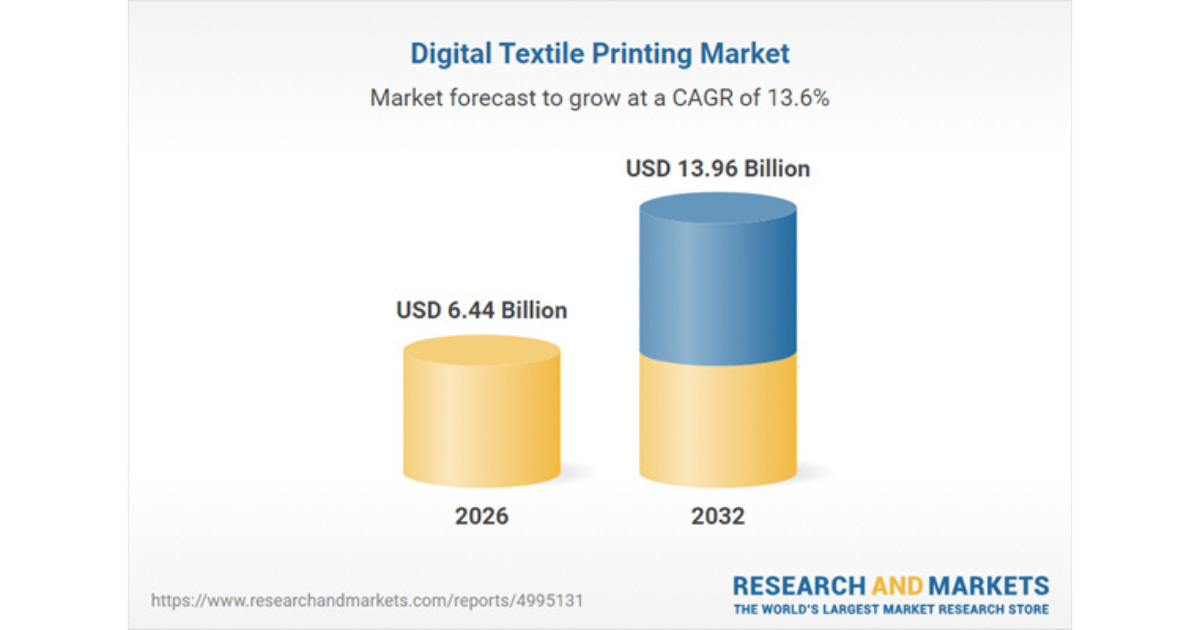
Digital Textile Printing Market Projected to Reach $13.96B by 2032
Summary:
Research and Markets forecast digital textile printing growth from $5.71B (2025) to $13.96B (2032) at 13.62% CAGR. The report emphasized sustainability standards, supply chain regionalization, and technology integration as primary drivers across all applications.
Industry takeaways:
Sustainability credentials shifted from optional differentiation to operational requirement, with water-efficient processes and transparent reporting becoming procurement criteria rather than marketing advantages
Supply chain regionalization and nearshoring gained priority as risk management strategy beyond purely cost-based sourcing decisions, affecting equipment placement and production capacity planning
Technology segmentation analysis differentiated single-pass versus multi-pass architectures by operational trade-offs in throughput, space requirements, and substrate flexibility rather than feature comparison
Why It Matters:
Sustainability became contractually required by brand buyers, not optional marketing. Supply chain regionalization actively reshaped capacity placement. However, growth forecasts provided context but not operational guidance for individual shops.
🎯 This Week’s Strategic Takeaway
Week 4 reinforced an operational principle: the most valuable improvements came from infrastructure supporting existing technology rather than headline-grabbing equipment launches. Service networks, third-party validation, color standards evolution, and business development programs addressed production reliability, consistency, and profitability—the factors determining operational success after purchase decisions got made.
❌ This Week’s Noise
Market forecasts projecting robust growth in digital textile printing offered useful context but limited operational guidance. Growth projections didn’t replace substrate testing, application demand validation, margin modeling, or the shop-floor execution work determining whether specific installations succeeded. Context wasn’t actionable intelligence.
📅 What’s Coming Up
📅 Sign & Digital UK + Printwear & Promotion LIVE! — February 22–24, 2026 | Birmingham NEC, UK
Combined trade show covering signage, wide format print, display graphics, and garment decoration technologies. Features hands-on demonstrations, latest equipment launches, and professional networking across visual communications and apparel decoration segments.
🔗 https://www.signuk.com
📅 FESPA Global Print Expo 2026 — March 24–27, 2026 | Berlin, Germany
Europe’s flagship wide format and textile printing event showcasing latest equipment, substrates, and workflow solutions across signage, graphics, and digital textile segments.
🔗 https://www.fespa.com
🧠 Smarter Every Week
Before committing to any equipment with “automated maintenance” claims, require vendor demonstration of actual maintenance procedures and documented intervention frequency under realistic production loads. Automation reduced touchpoints—it didn’t eliminate them—and shops needed to understand exactly what still required manual attention before planning labor allocation.
Thanks for tuning into this week’s Wide Format Brief. Until next time—keep printing.
Insightful. This really resonates with the idea that solid infrastructure is key, not just raw power. Like with AI, the underlying support systems are what truly make a platform viable and useful, not just the model's parametres. Great analysis!