

Your Weekly Large Format Print Briefing - Week 11, 2026
Your weekly 5-minute intelligence briefing for large format print professionals

Week 11 delivered a clear signal: the real action in wide format continued to come from OEMs filling gaps in their lineups and from financial results that revealed where margins actually improved—not from trade show hype cycles. Epson expanded its UV flatbed range with a new mid-tier model, Agfa reported strong Digital Print & Chemicals profitability after a difficult year, and FESPA formalized textile printing’s growing weight in the industry by launching a dedicated show. The week’s pattern was portfolio consolidation: vendors refining what they offer rather than chasing the next category.
📢 This Week in Wide Format Brief
Epson launched the SC-V4000 A1+ UV flatbed printer, filling the gap between its V1000 and V7000 models
Agfa-Gevaert reported full-year 2025 results with a 37% improvement in adjusted EBITDA for its Digital Print & Chemicals division
FESPA confirmed the exhibitor lineup for its inaugural Textile show at Barcelona 2026, formalizing garment decoration as a standalone category
ColDesi upgraded its DTF-12H2 to a six-color CMYKOG system, expanding the printer’s color gamut by 27%
drupa launched an online knowledge platform in partnership with PRINTING United Alliance, replacing its former annual Global Trends Report
📰 Top 5 Headlines This Week
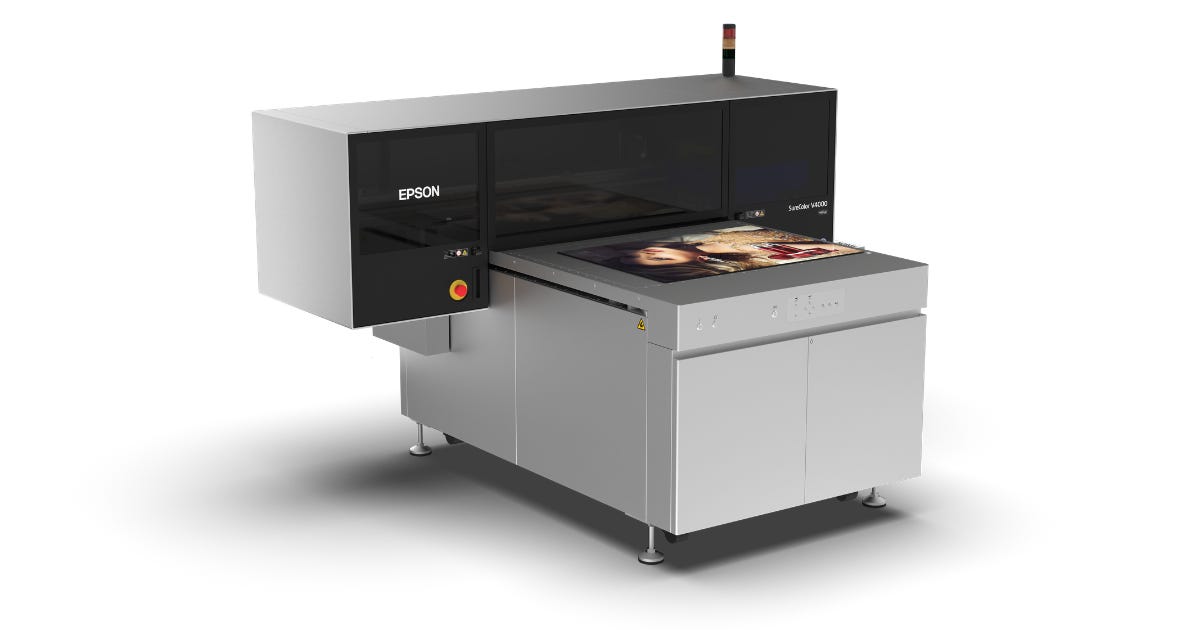
Epson Launches SC-V4000 A1+ UV Flatbed with 10-Colour Ink Set
Summary:
Epson announced the SC-V4000, a 10-colour A1+ UV flatbed filling the gap between its V1000 and V7000 models. The ink set adds Red, Grey, and Varnish alongside CMYK and light inks. Three PrecisionCore printheads support concurrent white/colour/varnish printing at 300 dpi. Table fits two A2 sheets; handles substrates up to 200mm thick. Available Summer 2026. No pricing disclosed.
Industry takeaways:
The 10-colour ink configuration—particularly the addition of Red and Grey alongside light inks—targets fine art, photography, and signage applications where gradation quality matters more than raw speed
Front-accessible operation and maintenance (nozzle checks, ink replenishment, waste tank replacement) reflects Epson’s push toward reducing operator training time on smaller flatbeds
UV DTF film compatibility extends output to curved and irregular substrates, positioning the V4000 for personalization and promotional product work alongside traditional signage
Why It Matters:
The A1/A2 UV flatbed segment grew because shops needed object printing without 4×8 flatbed capital costs. Epson building a 10-colour system at this size showed the segment was moving past novelty items into work where gradation and varnish effects justified premium pricing. Without disclosed pricing, it was unclear whether this competed with Roland’s VersaOBJECT desktop range or occupied a different tier entirely.
Agfa-Gevaert Reports Strong Q4 2025 Results, Digital Print & Chemicals Division Improves Profitability
Summary:
Agfa-Gevaert released full-year 2025 results on March 11. The Digital Print & Chemicals division posted €467M in revenue (+6.5% YoY) and lifted adjusted EBITDA from €30.8M to €42.3M—a 37% improvement. Q4 was particularly strong at €39M EBITDA. Growth came from Specialty Films & Chemicals, Digital Printing Solutions, and Green Hydrogen. The group posted a net loss of €71M, driven by continued medical film decline.
Industry takeaways:
Digital Printing Solutions and Specialty Films & Chemicals were the growth drivers, not traditional film—the business mix continued to shift toward inkjet and digital chemistry
Q4 free cash flow of €44 million showed operational discipline, with working capital improving from 29% to 26% of revenue
The medical film decline (revenue down 17.1% for that segment) underscored how dependent Agfa’s overall group results remain on a shrinking legacy business, even as its digital operations gained ground
Why It Matters:
Agfa is both a wide-format OEM and an ink supplier to the broader industry. A 37% EBITDA improvement in Digital Print & Chemicals—during a soft European economy—showed its inkjet portfolio investment was translating into real margin gains. For shops evaluating Agfa equipment or inks, this signaled a vendor building on its digital future rather than coasting on legacy revenue. The group net loss reflected the medical film problem, not printing.
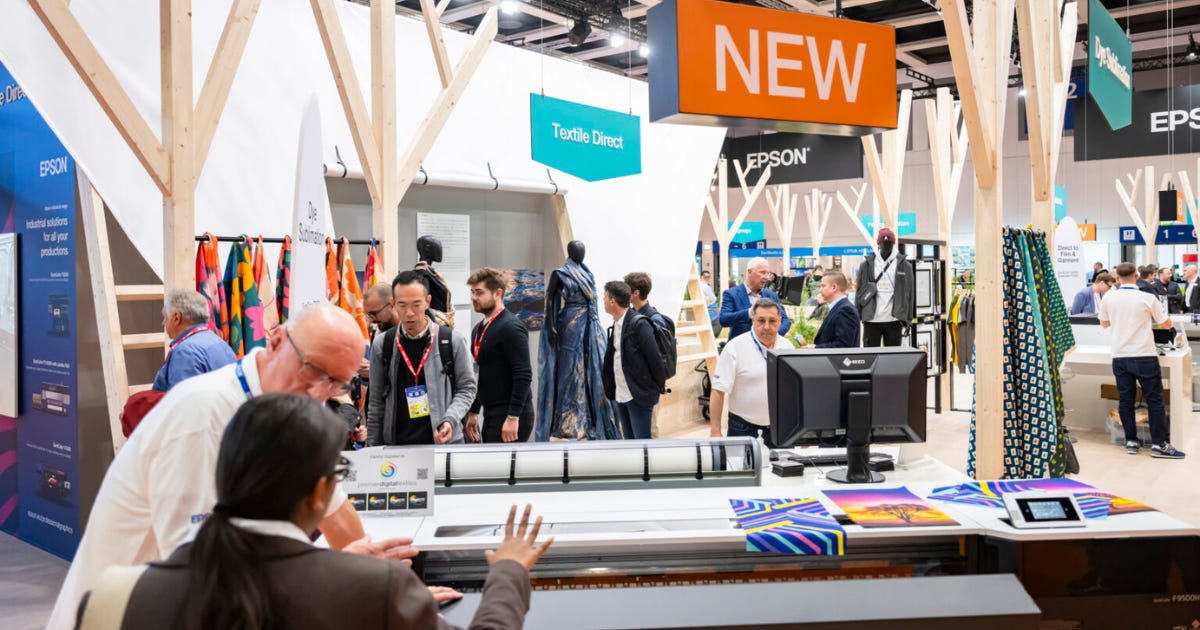
FESPA Confirms Exhibitor Lineup for Inaugural Textile Show at Barcelona 2026
Summary:
FESPA confirmed the exhibitor lineup for its first dedicated Textile show, running alongside FESPA 2026 in Barcelona (May 19–22). The show covers DTG, DTF, screen, sublimation, and transfer printing. Confirmed exhibitors include Kornit Digital, Epson, Mimaki, Brother, M&R, ROQ, STAHLS’, and Tajima, plus screen specialists Anatol and Saati. Ink suppliers Sun Chemical and workflow vendors Fiery and DRAWstitch round out the floor.
Industry takeaways:
The decision to create a standalone Textile show—rather than folding it into the main Global Print Expo floor—reflected how large the DTG/DTF/screen segment has become and how different its buyer profile is from traditional wide-format sign and display
The exhibitor list mixed industrial screen (ROQ, M&R, Anatol) with digital (Kornit, Epson, Mimaki, Brother), signaling that FESPA sees the textile space as a hybrid market rather than a purely digital one
Workflow and colour management vendors (Fiery, DRAWstitch, Fulfill Engine) appearing in the textile hall pointed to growing demand for production-grade software in garment decoration, not just hardware
Why It Matters:
A dedicated textile event confirmed what production floors have shown for years: garment decoration outgrew its role as a sideline within wide-format shows. For DTF and DTG operators, a focused show meant less time filtering through banner printers and more time evaluating relevant equipment. The mix of screen and digital exhibitors acknowledged that most garment decoration operations still use both—the transition is gradual, not a replacement.
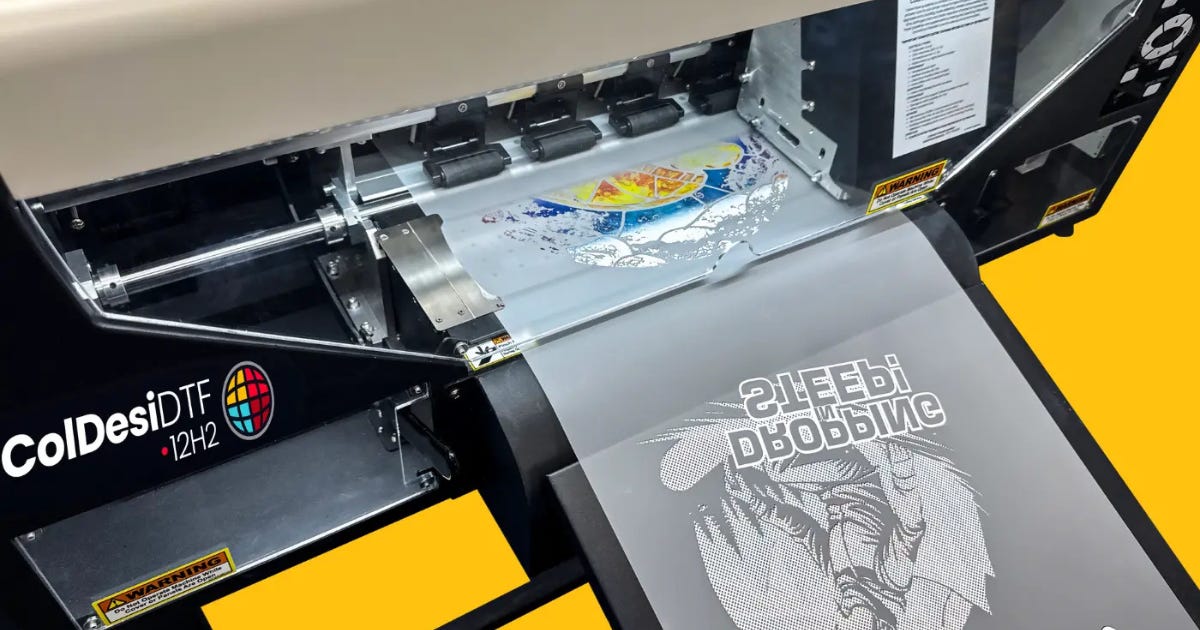
ColDesi Upgrades DTF-12H2 to Six-Colour CMYKOG, Claims 27% Wider Gamut
Summary:
ColDesi announced an expanded colour system for its DTF-12H2, adding Orange and Green inks to the standard CMYK+White setup. The company claimed the CMYKOG configuration expands gamut by 27%, reproducing approximately 100,000 more colours. The DTF-12H2 features dual Epson printheads, 12-inch width, and produces roughly 50 transfers per hour. Ships as a complete system with shaker, dryer, software, and training. Available now.
Industry takeaways:
Orange and Green inks address the specific gamut limitations of CMYK-based DTF—particularly in reproducing brand-specific oranges, teals, and greens that CMYK struggles with on film transfers
The 27% gamut expansion claim, if accurate, closed the colour accuracy gap between DTF and screen printing for many commercial applications, reducing the “it doesn’t match” conversation with clients
ColDesi packaging the upgrade into their existing DTF-12H2 platform, rather than requiring a new machine purchase, reduced adoption friction for existing users
Why It Matters:
DTF’s persistent weakness has been colour limitation—fast, durable transfers that struggled with specific brand colours screen printing hit without issue. Orange and Green addressed the most common complaints: vibrant oranges going muddy, teals shifting blue. For small DTF shops doing branded merchandise, improved accuracy meant fewer rejections and fewer jobs lost to screen printers. The upgrade fit the existing platform, reducing adoption friction.

drupa Launches Online Knowledge Platform with PRINTING United Alliance Partnership
Summary:
drupa launched “drupa insights,” a digital knowledge platform developed with Alliance Insights (PRINTING United Alliance’s research division). It replaces the former annual Global Trends Report with continuously updated market analyses. Launch topics cover label/packaging growth, AI and robotics, and production automation. Free access via one-time registration at drupa.com/insights. Positioned as part of drupa 2028’s strategic LEARN cluster.
Industry takeaways:
Moving from annual PDF reports to a continuously updated platform reflected how quickly the market was shifting—annual snapshots were already outdated by the time most shops read them
The PRINTING United Alliance partnership gave the platform access to the largest base of North American print industry research data, adding practical depth alongside European market perspectives
The initial topic selection (labels/packaging, AI/robotics, automation) aligned with where most capital investment decisions are currently being made, rather than covering broad “state of the industry” overviews
Why It Matters:
The Global Trends Report historically provided useful macro data but arrived once a year and rarely influenced daily decisions. A continuously updated platform—backed by Alliance Insights research—made the data more relevant for shops evaluating technology investments. Free access removed cost barriers for smaller operations. For anyone making purchasing decisions ahead of drupa 2028, this became a running data source rather than a document to file.
🎯 This Week’s Strategic Takeaway
The week’s strongest signal came from portfolio refinement: Epson filled a UV flatbed gap, ColDesi addressed a known DTF colour limitation, FESPA formalized textile’s market weight. When vendors focused on known pain points rather than chasing new categories, the results were immediately useful. Meanwhile, Brother Industries’ tender offer for Mutoh Holdings reaches its March 23 deadline—a deal that, if completed, would reshape the wide-format competitive landscape by giving Brother access to Mutoh’s UV, roll-to-roll, and CAD printing portfolio. Worth watching closely this week.
❌ This Week’s Noise
Market forecasts and “future of print” predictions continued to circulate in pre-FESPA preview content, but most lacked the specificity needed for operational decisions. Knowing that digital textile printing is “one of the most dynamic growth areas” told shop owners nothing about which equipment to buy, which substrates to stock, or how to price the work. Growth projections without production economics remained interesting context—and nothing more.
📅 What’s Coming Up
📅 ISA Sign Expo 2026 — 8–10 April 2026 | Orlando, FL North America’s leading trade show for sign, graphics, and visual communications, featuring live demos of wide-format printers, finishing equipment, digital signage, and substrate innovations. Mimaki will debut the UJ330H-160 live on the show floor. 🔗 https://signexpo.org
📅 FESPA Global Print Expo 2026 — 19–22 May 2026 | Barcelona Over 500 exhibitors across wide-format, textile, signage, personalisation, corrugated, and wrapping. First year back in Barcelona since 2012, with new co-located Textile and Corrugated shows. 🔗 https://www.fespa.com
🧠 Smarter Every Week
If you’re evaluating UV flatbed printers in the A1/A2 range, test actual production jobs—not vendor demo files. Print a dark substrate piece with fine white text, a photo-quality gradient, and a three-layer (white + colour + varnish) run in sequence. That single test reveals more about real throughput and quality than any spec sheet comparison.
Thanks for tuning into this week’s Wide Format Brief. If this saved you 30 minutes of scrolling trade press this week, it did its job. Until next time—keep printing.