

Your Weekly Large Format Print Briefing — Week 10, 2026
Your weekly 5-minute intelligence briefing for large format print professionals.

Week 10 delivered fewer headline-grabbing machine launches and more practical developments that affect real production environments. Mimaki pushed hybrid UV capability into a lower price bracket, Roland focused on running-cost improvements for existing hardware, and Durst signaled a shift toward AI-driven production intelligence. Meanwhile, a major U.S. PSP investment in multiple swissQprint flatbeds reinforced continued demand for premium flatbed output.
📢 This Week in Wide Format Brief
• Mimaki launched the UJ330H-160 hybrid UV printer targeting mixed roll and rigid production.
• Roland DG expanded D-EA2 multi-color ink compatibility for the TrueVIS XP-640.
• Lithographix installed three swissQprint Kudu flatbed printers to expand production capacity.
• Durst introduced Kyveris, an AI production intelligence platform.
• Women in Print Alliance expanded industry programs and leadership initiatives for 2026.
📰 Top 5 Headlines This Week
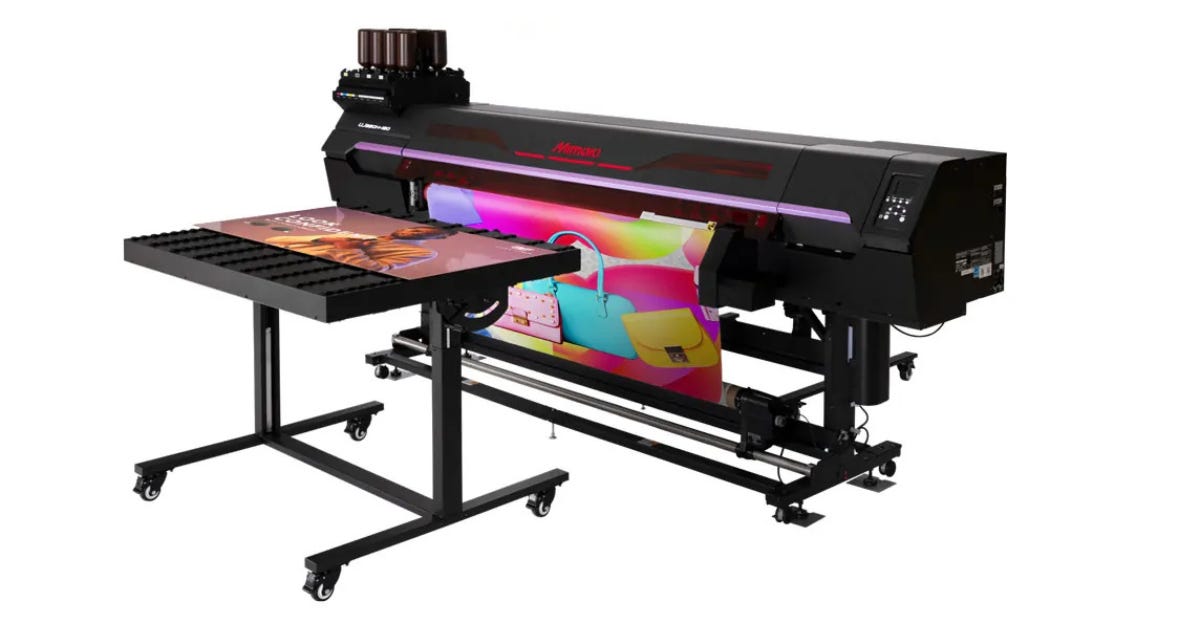
Mimaki Introduced the UJ330H-160 Hybrid UV Printer for Roll and Rigid Production
Summary:
Mimaki launched the UJ330H-160 hybrid UV printer as part of its 330 Series, combining roll-to-roll and rigid printing capability on a single platform. The printer supports media up to 50.8 mm thick and offers production speeds of up to roughly 22 m²/hour in 2×CMYK mode. Mimaki positioned the system below €40,000 with market availability beginning in April 2026.
Industry Takeaways:
• Hybrid UV systems are moving into mid-tier price brackets.
• Roll-and-rigid versatility targets shops handling mixed application workflows.
• Published pricing suggests the platform is approaching real deployment rather than trade-show preview status.
Why It Matters:
Hybrid printers only add value when they reduce outsourcing and workflow fragmentation. Mimaki’s pricing puts UV hybrid capability closer to solvent upgrade territory, potentially allowing shops to bring short-run rigid work in-house without committing to a dedicated flatbed printer.
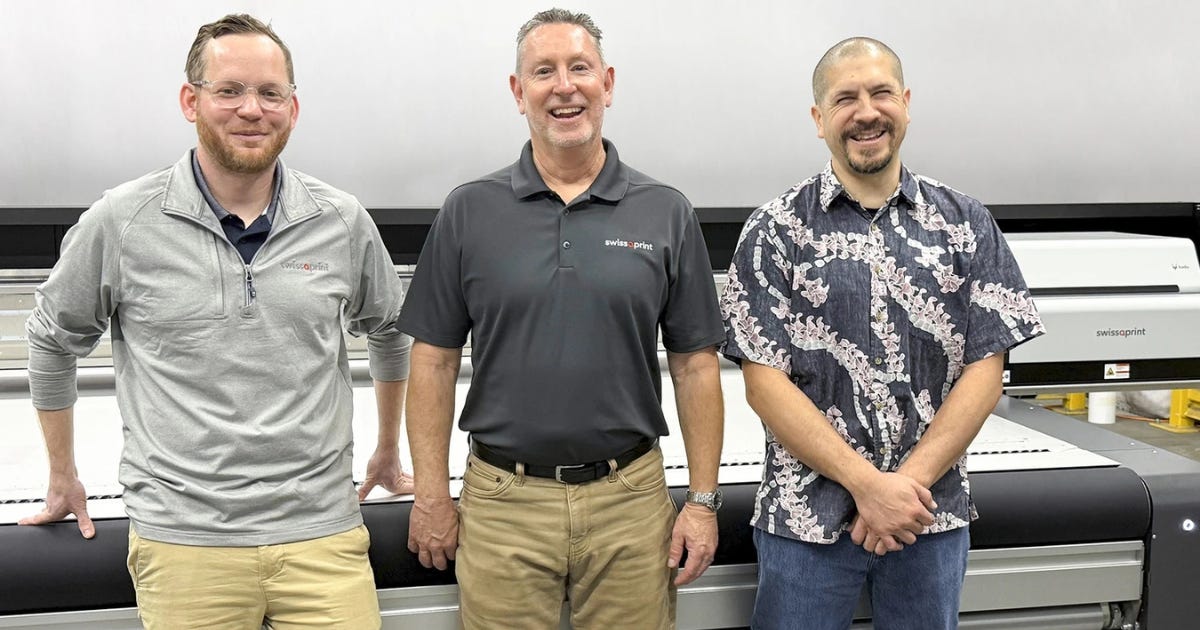
Lithographix Installed Three swissQprint Kudu Flatbed Printers
Summary:
U.S. print service provider Lithographix installed three swissQprint Kudu flatbed printers to expand production capacity and support specialty output. Each printer includes ten configurable color channels capable of running white, neon inks, orange, and varnish layers, enabling both high-volume production and decorative or tactile printing effects.
Industry Takeaways:
• Multi-printer installations often signal sustained demand rather than experimental adoption.
• Configurable channels support specialty inks and textured applications.
• Redundant equipment improves reliability for high-volume campaign production.
Why It Matters:
Large capital investments from print service providers often provide clearer market signals than vendor announcements. Lithographix is effectively betting that specialty flatbed applications—tactile graphics, decorative finishes, and premium signage—will continue delivering stronger margins than commodity wide-format output.
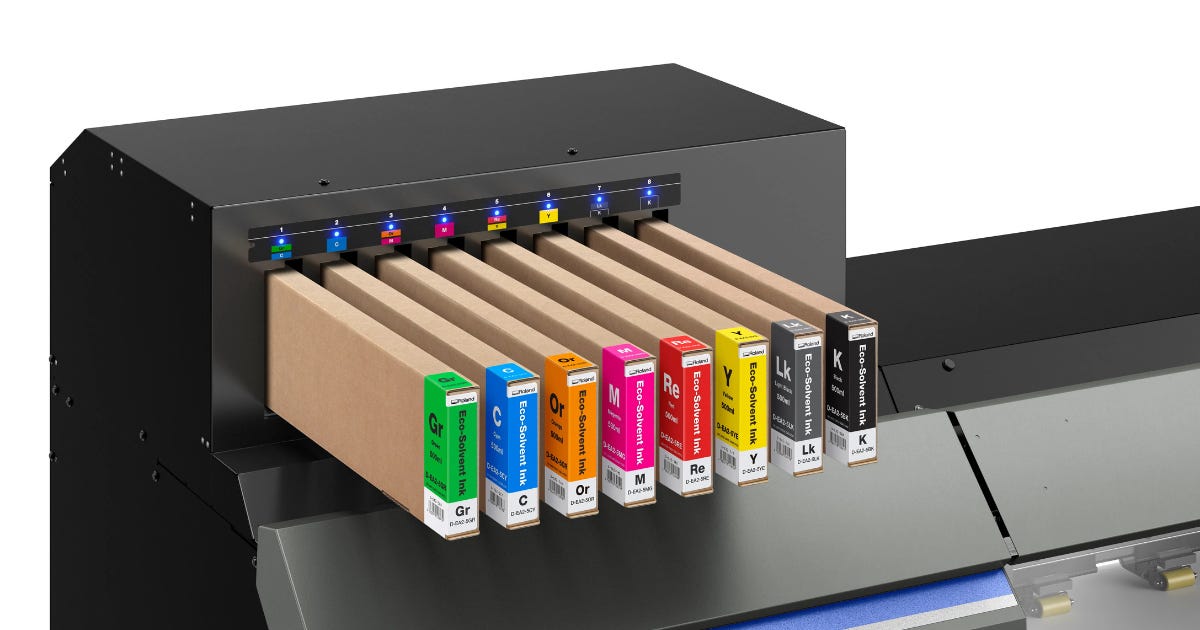
Roland DG Expanded D-EA2 Ink Compatibility for TrueVIS XP-640
Summary:
Roland DG expanded compatibility between its D-EA2 eco-solvent ink set and the TrueVIS XP-640 printer. The configuration supports CMYK plus Red, Orange, Green, and Light Black inks, extending the color gamut while improving tonal transitions. Roland indicated the new ink option could reduce running costs by up to 40 percent compared with TH inks.
Industry Takeaways:
• Consumable economics remain a major factor in print profitability.
• Expanded ink sets help meet strict brand-color requirements.
• Installed platforms continue evolving through firmware and ink compatibility updates.
Why It Matters:
Consumables strategy often has more impact on profitability than hardware upgrades. If print shops can widen color gamut while lowering ink costs per square meter, the improvement directly affects quoting flexibility, production margins, and long-term equipment viability.

Durst Introduced the Kyveris AI Production Intelligence Platform
Summary:
Durst marked its 90th anniversary on March 4 by announced Kyveris as an AI-driven system designed to integrate printers, workflow software, and production data into a unified platform. The company described it as a continuously learning production environment intended to optimize operational performance and equipment utilization. Durst plans to demonstrate the system publicly during FESPA 2026.
Industry Takeaways:
• Printer manufacturers are shifting focus toward workflow intelligence.
• AI-driven production optimization is emerging as a strategic priority.
• Implementation details remain limited ahead of public demonstrations.
Why It Matters:
The broader significance is strategic rather than immediate. Competitive advantage in digital printing is gradually shifting from raw machine speed to workflow automation and production visibility. Systems like Kyveris could eventually reshape how print facilities schedule jobs and manage equipment capacity.
Women in Print Alliance Expanded Professional Programs for 2026
Summary:
PRINTING United Alliance expanded Women in Print Alliance programming for 2026 with additional webinars, regional meetups, community forums, and leadership initiatives. The organization also continues the Her Imprint podcast series and confirmed the Women in Print Luncheon at the upcoming PRINTING United Expo.
Industry Takeaways:
• Workforce development remains a long-term industry challenge.
• Professional networks are expanding beyond traditional trade events.
• Structured leadership initiatives are becoming more common across the industry.
Why It Matters:
Workforce shortages continue affecting print production capacity. Programs focused on leadership development and professional networking can improve recruitment and retention, strengthening the long-term stability of the printing workforce.
🎯 Strategic Takeaway
Week 10 reinforced a trend that has been building for several years: efficiency improvements now matter more than raw printer speed. Hybrid platforms, consumable cost reductions, and automation tools all aim at the same objective—producing more applications with fewer machines and tighter workflow control.
❌ This Week’s Noise
AI workflow announcements continue increasing, but many remain conceptual until real integrations and measurable productivity improvements appear in live production environments.
📅 What’s Coming Up
📅ISA International Sign Expo 2026 — April 8–10 | Orlando, Florida
North America’s largest sign and graphics exhibition covering equipment, substrates, and workflow technology.
🔗 https://www.signexpo.org
📅Inkjet Summit 2026 — April 27–29 | San Antonio, Texas
Executive-level event focused on production inkjet strategy and vendor roadmaps.
🔗https://ijsummit.com
📅FESPA Global Print Expo 2026 — May 19–22 | Barcelona, Spain
Europe’s flagship exhibition for wide format printing, textile printing, and specialty graphics.
🔗https://www.fespa.com
📅WrapFest at FESPA 2026 — May 19–22 | Barcelona, Spain
Dedicated event focused on wrap films, laminates, adhesives, and installation tools.🔗https://www.wrap-fest.com
🧠 Smarter Every Week
When evaluating a hybrid printer, run identical color test files in both roll and rigid modes. Many hybrid systems behave differently depending on media transport and curing conditions. A repeatable control file quickly reveals whether the platform maintains stable color and density across both workflows.
Thanks for tuning into this week’s Wide Format Brief. If you found this useful, share it with a colleague who’d benefit. Until next time—keep printing.