

Your Weekly Large Format Print Briefing - Week 7, 2026
Your weekly 5-minute intelligence briefing for large format print professionals

Week 7 delivered a clear signal: the most consequential moves in wide format last week weren’t about faster printers or flashier output—they were about closing gaps between production stages, tightening compliance, and building structure around emerging tools like AI. Durst extended its reach into cutting, regulatory pressure landed on textile producers, and the industry’s largest trade association gave printers a framework to measure AI readiness instead of just talking about it.
📢 This Week in Wide Format Brief
Durst acquired a majority stake in Hasler Solutions, expanding into integrated industrial-scale cutting
PRINTING United Alliance launched an online AI Readiness Benchmark for print and packaging workflows
NUtec Digital Ink released a GBL-free eco-solvent ink as a plug-and-play Mimaki CS250 replacement
PRINTING United Alliance reviewed the state of textile EPR legislation advancing across US states
Drytac showcased a 165-metre temporary rink graphics project using SpotOn White M50 in Belfast
📰 Top 5 Headlines This Week
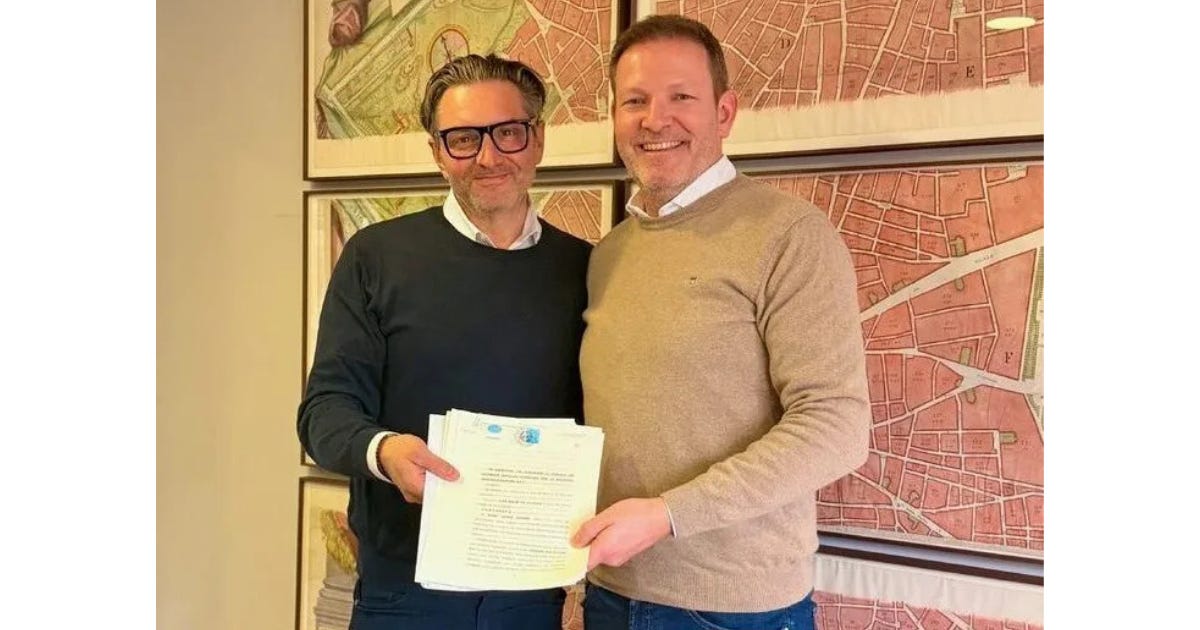
Durst Acquires Majority Stake in Hasler Solutions Cutting Systems
Summary:
Durst Group acquired a majority stake in Hasler Solutions Spain, a cutting systems manufacturer with over 17 years of engineering history. Co-owner Marc Hasler remains in place, and the company stays independent and open to all customers. Durst plans to scale integrated print-and-cut to industrial levels, with more details expected at FESPA Barcelona 2026.
Industry takeaways:
Integrated print-and-cut workflows at industrial scale reduce handoff points between production stages, directly impacting throughput and labor allocation
Hasler’s Magna cutting table—5.1m wide with speeds up to 120m/min—fills a gap in Durst’s portfolio where cutting was previously outsourced or partnered
Keeping Hasler independent and open to all customers signals Durst is building ecosystem value, not locking out competitors
Why It Matters:
Print shops rarely lost margin at the printer—they lost it between printing and finishing. Durst’s move into cutting addressed a production gap that most OEMs left to third parties. Integrating print and cut under one engineering roof reduced handoff complexity and opened a path toward tighter workflow automation at scale.

PRINTING United Alliance Launches Online AI Readiness Benchmark for Print Workflows
Summary:
PRINTING United Alliance officially launched its online AI Readiness Benchmark on February 12, providing print and packaging companies with a structured assessment of their preparedness to apply AI in real production workflows. The tool builds on the PRINTING AI Pavilion at Expo 2025 and forms part of a broader ecosystem including courses, consulting, and governance resources.
Industry takeaways:
A vendor-neutral readiness assessment gave shops a starting point that didn’t begin with a sales pitch—something the market lacked
Emphasis on governance, risk management, and operational reality positioned this as a business tool, not a technology demo
85% of printers reported already experimenting with AI at Expo 2025, but most lacked structure around what to do next
Why It Matters:
AI adoption in print stalled not from lack of interest but from lack of structure. Most shops experimented with tools but couldn’t evaluate where AI hit the P&L versus where it was just noise. A benchmark rooted in operational reality—not vendor promises—gave shops a framework to move from curiosity to measurable integration.
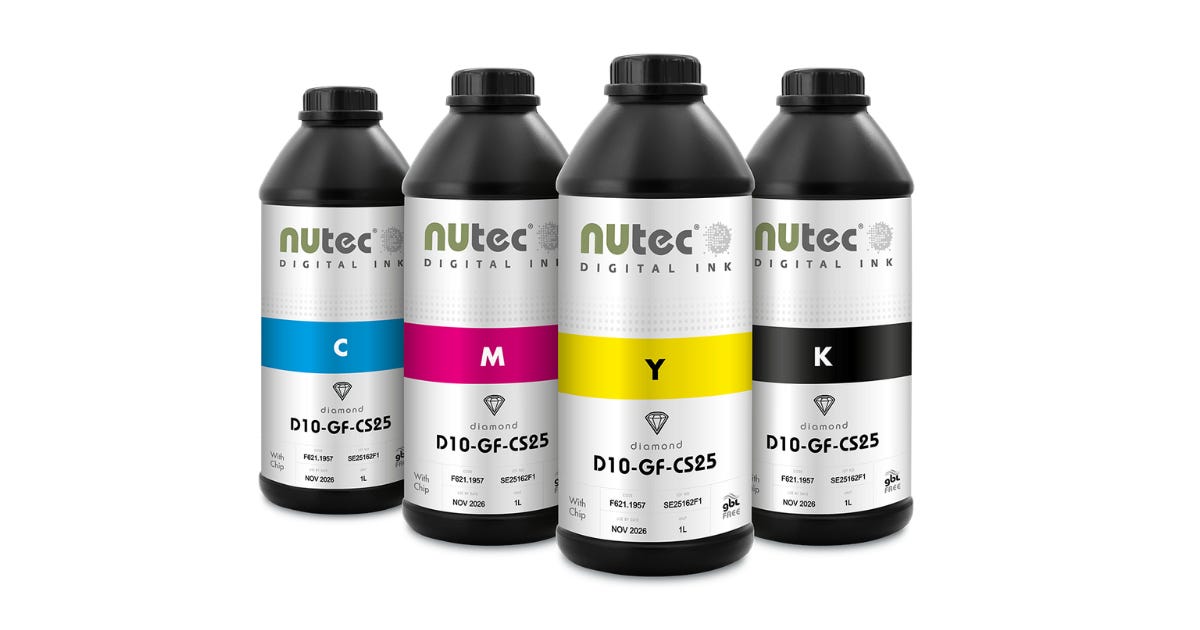
NUtec Digital Ink Releases GBL-Free Eco-Solvent Ink as Plug-and-Play Mimaki CS250 Replacement
Summary:
NUtec Digital Ink released Diamond D10-GF-CS25, a GBL-free eco-solvent ink designed as a direct replacement for Mimaki CS250 inks. The ink is chemically and colour matched, requires no flushing or re-profiling, and is compatible with Mimaki JV100, CJV100, JV200, and CJV200 printers. Available in CMYK with an 18-month shelf life and backed by NUtec’s IDS Warranty.
Industry takeaways:
Plug-and-play conversion with no flushing or profiling eliminated the transition risk that kept many shops on OEM inks despite regulatory pressure
GBL-free formulation addressed tightening restrictions across multiple regions, particularly in Europe and the UK where GBL classification has been under review
IDS Warranty coverage on a third-party ink reduced the perceived risk of switching from OEM consumables
Why It Matters:
Regulatory compliance rarely waited for convenient timing. Shops running Mimaki eco-solvent printers faced growing GBL restrictions with limited drop-in alternatives. A colour-matched, no-flush replacement removed the operational disruption that made compliance feel like a production risk instead of a routine consumable swap.
PRINTING United Alliance Reviews State of Textile EPR Legislation in the US
Summary:
PRINTING United Alliance published a review of textile Extended Producer Responsibility legislation advancing across US states. California leads with the first enacted textile EPR law, with producer registration deadlines set for July 1, 2026. New York and Washington have introduced similar bills, signaling broader regulatory momentum affecting apparel decorators and fabric printers.
Industry takeaways:
Producer registration deadlines in California (July 2026) created an immediate compliance timeline for brands and decorators operating in that market
EPR obligations typically fell on brand owners, but downstream print service providers faced indirect pressure through documentation, material tracking, and supply chain transparency
New York and Washington bills suggested textile EPR was becoming a national pattern, not a single-state outlier
Why It Matters:
Regulatory shifts in textiles moved slowly until they didn’t. California’s EPR law set concrete deadlines that would affect how apparel decorators, soft signage producers, and promotional textile printers operated. Shops that tracked these developments early had time to adapt workflows and documentation—those that waited risked scrambling when compliance became mandatory.
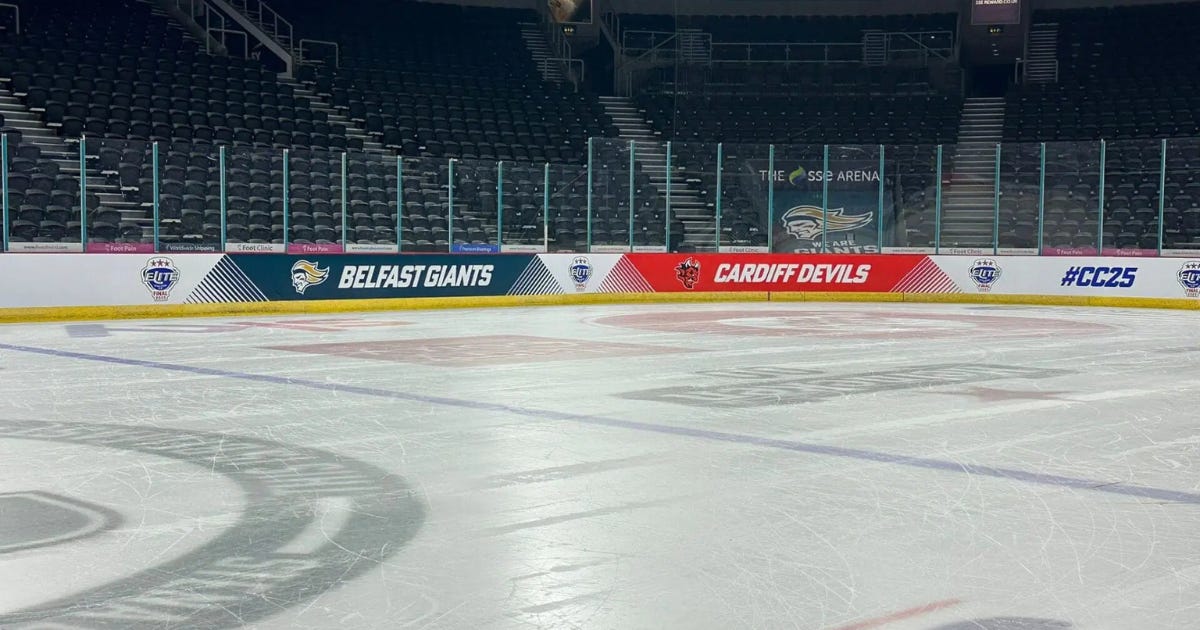
Drytac SpotOn White M50 Delivers 165-Metre Temporary Rink Graphics for Belfast Giants
Summary:
Signs Express Belfast used Drytac SpotOn White M50 to produce and install over 165 linear metres of temporary dasher board graphics for the Belfast Giants’ Champions Hockey League games at SSE Arena. The dot-pattern adhesive film, 50% more opaque than standard SpotOn White, enabled full arena installation in under three hours and clean removal by non-specialist staff.
Industry takeaways:
50% higher opacity over standard SpotOn White solved the overlay problem—existing permanent sponsor graphics didn’t show through on broadcast television
Sub-three-hour full-arena install and tool-free removal by venue operations staff demonstrated that production value extended well beyond the print itself
Broadcast-quality colour fidelity on Epson SureColor S80600 confirmed that mid-range hardware paired with the right media delivered professional results under demanding conditions
Why It Matters:
Temporary graphics projects lived or died on turnaround speed and clean removal—not print quality alone. A media choice that let venue staff handle removal without specialist training turned a print job into a repeatable service contract. That operational simplicity, not the ink or the printer, was what made the project commercially sustainable.
🎯 This Week’s Strategic Takeaway
Week 7 revealed a consistent pattern: the most valuable moves closed gaps between production stages and reduced ambiguity. Whether through integrated print-and-cut hardware, structured AI readiness frameworks, or regulatory-compliant consumable swaps, the industry continued to reward clarity, repeatability, and reduced friction over novelty.
❌ This Week’s Noise
Broad AI hype continued to circulate without operational grounding—claims that AI would “transform everything in print” offered no framework for measuring impact on specific workflows, margins, or staffing. The Alliance’s benchmark stood out precisely because most AI conversation in print still lacked structure, timelines, or accountability.
📅 What’s Coming Up
📅 Sign & Digital UK + Printwear & Promotion LIVE! — 22–24 February 2026 | Birmingham NEC, UK
Combined trade show covering signage, wide format print, display graphics, and garment decoration technologies. Features hands-on demonstrations, latest equipment launches, and professional networking across visual communications and apparel decoration segments.
🔗 https://www.signuk.com
📅 ISA International Sign Expo 2026 — 8–10 April 2026 | Orlando, FL
North America’s largest sign, graphics, and visual communications trade show, featuring wide-format printing equipment, substrates, software solutions, and installation technologies with education sessions focused on business operations and emerging applications.
🔗https://www.signexpo.org
📅 FESPA Global Print Expo 2026 — 19–22 May 2026 | Barcelona, Spain
Europe’s premier specialty print exhibition covering wide format, textile printing, screen printing, and digital decoration technologies.
🔗 https://www.fespa.com
🧠 Smarter Every Week
Before switching any consumable—OEM or third-party—run a controlled reference job on the current ink first. Print it, measure it, photograph it under consistent lighting. That baseline is the only reliable comparison when evaluating the new product. Without it, you’re measuring feel, not fact.
Thanks for tuning into this week’s Wide Format Brief. If you found this useful, share it with a colleague who’d benefit. Until next time—keep printing.